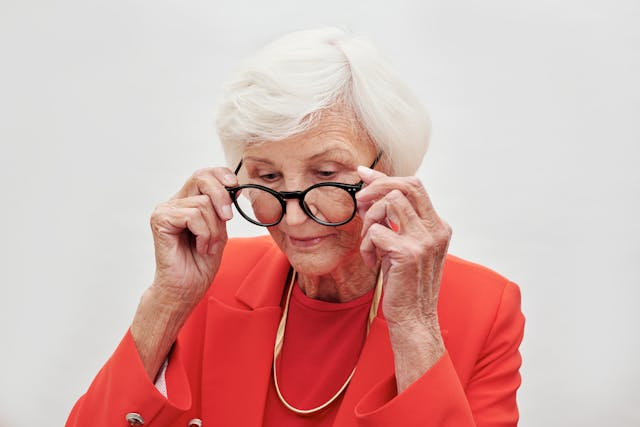
OCTOBER 10th is WORLD SIGHT DAY. The Canadian Association of Retired Persons (CARP) wants to remind you to take a look at your eye health as you age.
As you get older, it can be normal to notice changes in your vision. It can come as no surprise, for example, to find yourself needing a stronger pair of reading glasses. You may notice other changes, such as:
- Difficulty distinguishing between certain colours
- Difficulty adjusting to changes in lighting, or need for increased lighting
- Greater glare
- Dry eyes
Aging eyes also means an increase in the risk of age-related ocular diseases or conditions:
Presbyopia: an eye condition that makes it hard to focus on objects up close. It is a natural consequence of aging that happens when the lens of your eye loses its elasticity and flexibility.
Glaucoma: a group of diseases that affect the optic nerve in the eye which can result in irreversible vision loss.
Dry eye: occurs when the eyes don’t produce enough tears or produce tears without the proper chemical composition.
Age-related macular degeneration: an eye disease that affects central vision.
Cataracts: The leading cause of visual impairment in older individuals, cataracts are a clouding of the natural lens of your eye that causes your vision to appear blurry.
When it comes to aging and eye health, “an ounce of prevention is worth a pound of cure.” Here are three easy strategies to manage your eye health as you age:
- Get regular eye exams
Especially as you age, eye conditions can creep up on you without symptoms. Conditions like glaucoma or macular degeneration can be detected through eye exams before you notice any symptoms at all.
- Keep track of your general health
Managing your general health can be beneficial to your vision. If left unchecked, conditions like diabetes, cholesterol or high blood pressure can have significant impacts on vision.
- Common sense eye care
You can help maintain eye health by some of the usual ways of looking after your health, like eating well, avoiding smoking and wearing sunglasses to decrease your long-term exposure to ultraviolet rays.
Read more about eyecare and how CARP is advocating here.
Need a refresher on who is who in eyecare? Here is an overview from the Canadian National Institute for the Blind (CNIB)
Ophthalmologist: An eye doctor who specializes in eye and vision care and the diagnosis and treatment of eye diseases. Ophthalmologists provide comprehensive eye examinations, prescribe corrective lenses, prescribe and administer medication and perform surgery. Ophthalmologists have graduated from medical school, followed by one year of internship and three to four years of additional residency training in the refractive, medical and surgical treatment of eye diseases.
Learn more about ophthalmologists on the Canadian Ophthalmological Society website.
Optometrist: An eye doctor who performs eye examinations, diagnoses eye disease, treats common eye disorders and may prescribe medication in some provinces. They also prescribe glasses and contact lenses, are trained to dispense low-vision aids and provide visual training. Optometrists have graduated from optometry school with a minimum of five years of post-secondary education to obtain the professional designation “Doctor of Optometry (OD).”
Learn more about optometrists on the Canadian Association of Optometrists website.
Optician: A professional who fits and dispenses eyeglasses and contact lenses according to prescriptions supplied by an optometrist or ophthalmologist. Opticians may also dispense low-vision aids. Opticians complete a minimum of two to four years of post-secondary training through one of seven programs in Canada.
Learn more about opticians on the Opticians Association of Canada website.
Low Vision Specialist: A graduate of a post-secondary institution with a major in health science or vision loss rehabilitation and a professional background in nursing, orthoptics, and/or ophthalmology. Low vision specialists provide education about medical diagnoses, training in the use of optical and non-optical visual aids and on how to most efficiently use residual vision. They also complete visual acuity and field-loss testing and refer clients to appropriate resources and organizations.
Learn more about low-vision services in your community on the Vision Loss Rehabilitation Canada website.
[1] https://www.cnib.ca/en/sight-loss-info/your-eyes/your-eye-care-team?region=on