CARP was delighted to have our esteemed panelists join us for National Seniors Day to address Canadians’ financial security concerns.
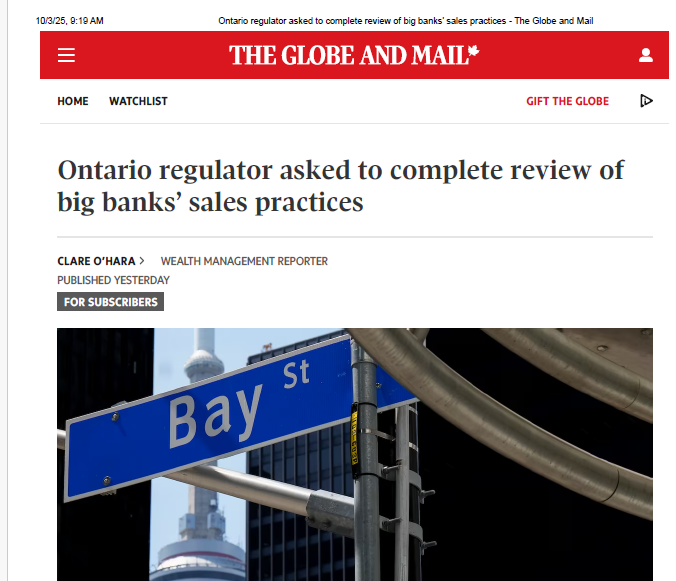
What we heard from the OSC was sobering: their survey results show that a significant portion of bank clients continue to receive investment advice that is not in their best interest. The incentives at play appear to leave the investor in the back seat.
The CARP audience did not come away with much confidence that there is an imminent remedy to the current situation.
Following CARP’s pre-budget submission to the federal government, and informed by our panelists’ framing of the state of in-branch financial advice, CARP’s next step as an advocacy voice is to continue educating seniors—who have a high level of trust in their banks—about what the studies are showing, and to campaign for regulators and policymakers to act.
The evidence cited in the OSC/CIRO report, along with testimony from advisors and finfluencers (and what is widely acknowledged within the industry), is clear: highly trusting in-branch investors—often with lower financial literacy or asset thresholds below the “wealthy” cut-off—are being severely underserved by the banks. “Underserved” may even be an understatement.
It is time for regulators to regulate. And if they do not, policymakers must step in and require the banks to fix what the industry already knows is broken.
Older Canadian investors cannot afford an indefinite back-and-forth between banks, regulators, and policymakers. As long as these conditions persist, they are at risk.
As a next step, CARP will continue to do two things:
-
Educate seniors—many of whom, despite modest financial literacy or lower asset thresholds, still rely on their bank branch for trustworthy advice.
-
Press regulators and policymakers to act—because when investors are consistently underserved, regulation becomes unavoidable. If voluntary change is insufficient, policy must require banks to fix what is widely acknowledged to be broken.