March 2026
On March 25, 2026, CARP made a formal submission to the Standing Committee on Justice and Human Rights regarding Bill C-16, the Protecting Victims Act. This bill proposed federal legislation that would criminalize coercive control in intimate partner relationships.
We welcome the government’s efforts to recognize coercive control as a serious form of abuse. This is an important and long-overdue step in addressing patterns of harm and being preventative, as these cases can often escalate into more severe violence. However, CARP is concerned about a critical gap in this bill. As currently written, Bill C-16 does not adequately protect older Canadians.
Why this Bill Matters for Older Adults
Coercive control refers to a pattern of controlling behaviour that takes place over time in the context of intimate partner relationships, as well as familial relationships and serves to “entrap” victims, eliminating their sense of freedom in the relationship. While the bill focuses on intimate partner relationships, the reality for many older Canadians is different.
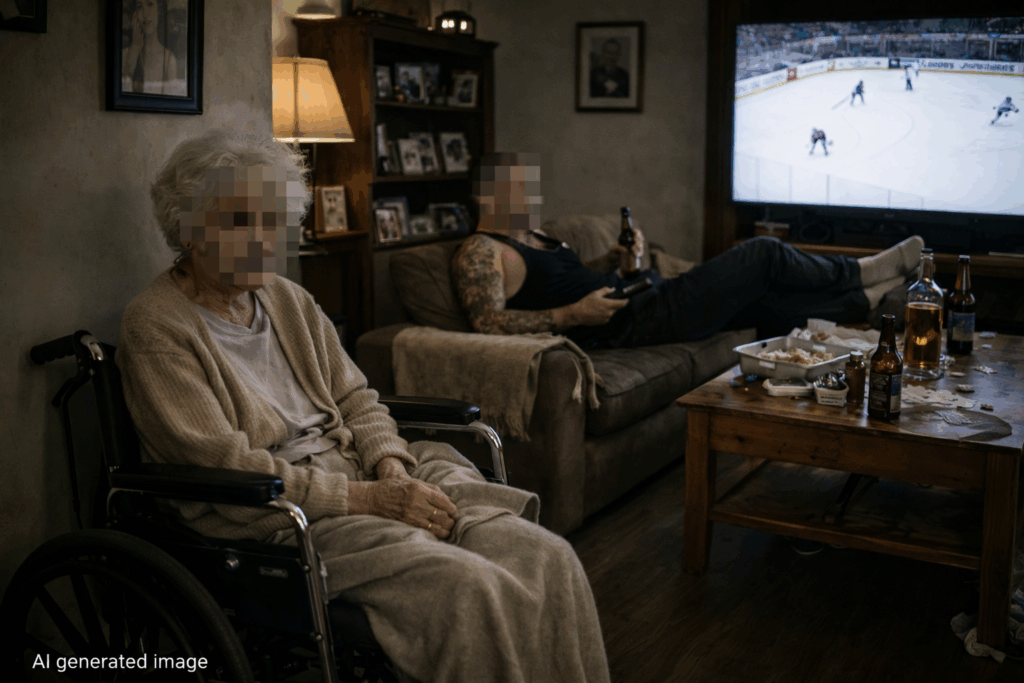
Evidence shows that older adults are more likely to experience abuse from family members, particularly from adult children, than from spouses. In fact, the majority of elder abuse in Canada occurs outside of intimate partner relationships. Older adults are also in a unique situation where many rely on others for care and support due to health challenges, mobility limitations, or cognitive decline. While most caregiving relationships are positive, this reliance can create power imbalances that increase vulnerability to coercive and controlling behaviour.
What Coercive Control can Look Like
Coercive control is often not a single incident, but a pattern of behaviour that develops over time. For older adults, this can include:
- withholding or controlling access to money,
- isolating the individual from family, friends, or community supports,
- denying access to transportation, mobility aids, or communication tools,
- interfering with healthcare or decision-making, and/or
- using threats, intimidation, or manipulation.
These behaviors can gradually erode autonomy, independency, and dignity and often leave individuals feeling trapped, fearful, and dependent.
The Gap in Bill C-16
Where CARP is concerned, the bill proposes to criminalize coercive control but only when it occurs between intimate partners. This creates a serious and unintended gap.
Under the current proposed framework:
- An older adult experiencing abuse from a spouse would be protected.
- An older adult experiencing the same behaviour from a child, relative, or caregiver would not be.
This distinction leaves a significant portion of older Canadians without equal protection under the law.
CARP’s Recommendation
To ensure legislation reflects the lived experiences of older Canadians, CARP recommended to the Standing Committee on Justice and Human Rights that it amend Bill C-16 to expand the definition of who can commit coercive control.
Specifically, we call for the inclusion of:
- Current or former intimate partners
- Relatives
- Informal caregivers (defined as those having an informal care relationship, whether paid or unpaid, other than those covered by regulated professional services).
CARP calls upon the federal government to close the gaps in Bill C-16 to better protect older adults. Criminalizing coercive control is intended to enable earlier intervention and prevent abuse from escalating, more often than not, into physical harm. For older Canadians, this protection must extend beyond intimate partner relationships to include the familial and caregiving dynamics where abuse often occurs.
Bill C-16 presents an important opportunity where coercive control will be recognized under the law. With targeted amendments, it can better reflect the realities of aging and ensure that all individuals, regardless of their relationship to the perpetrator, are equally protected under the law.
To read our submission to the Standing Committee on Justice and Human Rights, please click here
To read about Bill C-16 in detail, please click here