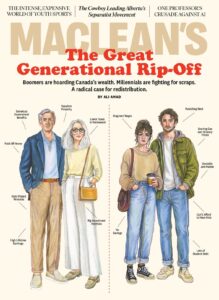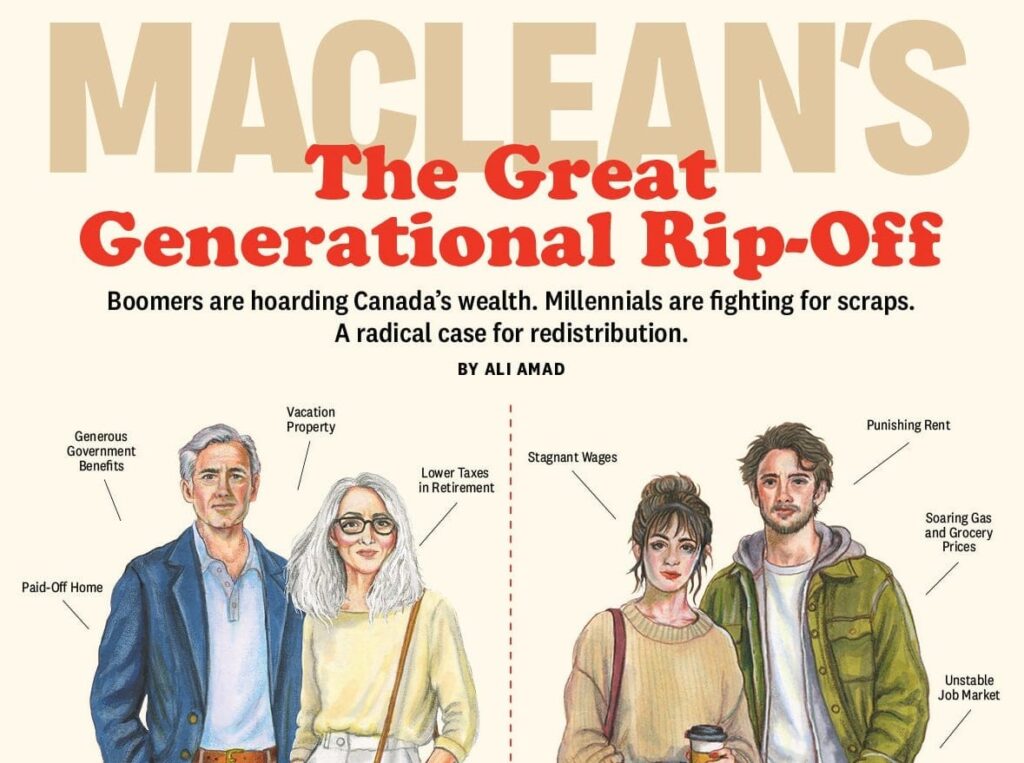
In his LinkedIn post promoting this inflammatory article, Ali Amad says he is not blaming seniors. The Maclean’s magazine cover, however, accuses boomers of “hoarding” wealth, and the article describes seniors as obstacles to reform as he criticizes the entire generation.
He also says he seeks solutions that do the most good and least harm. But he does not seriously assess the harm he’s so willing to inflict.
He endorses eliminating a tax credit used by some retirees on modest incomes while masking changes as only asking affluent seniors to accept a little less.
A retired renter living on $40,000 a year would need to know whether their taxes would rise and whether any replacement benefit would compensate them. He says the poorest seniors would be protected, but fails to mention how.
In his exuberance to join the intergenerational fight, Mr. Amad also gets the arithmetic wrong. He describes the federal Age Amount as being worth $9,028 annually. That is the amount used to calculate the credit. Using the 2025 figures he cites, the ordinary maximum tax saving is $9,028 × 14.5% = $1,309.06, provided the senior has sufficient federal tax payable to use it.
His figure is almost seven times that amount… and because this is clearly opinion rather than reporting, facts may be of secondary importance.
Before arguing that seniors should lose this tax relief, he ought to get its value right.
His accounting is selective, too. Mr. Amad presents seniors’ benefits as an $83-billion annual bill. His comparison for younger Canadians stops at EI, the Canada Child Benefit and childcare. Employment and tuition tax credits, first-home savings incentives and other supports available before retirement are absent from that tally. Those are public supports, too. And he all together omits the fact that those baby boomers (including those much loathed and envied homeowners) are paying an astronomical amount of tax. A proper comparison would include all the numbers.
Before declaring a generational rip-off, he should put both sides of the ledger in front of his readers.
Mr. Ali Amad also endorses a change to OAS that he does little to explain: moving the clawback from individual income to household income. Under the existing rules, each person’s income determines whether their OAS is reduced. Under Kershaw’s proposal, a spouse’s income would also count. A retired couple with $55,000 each would exceed the proposed $100,000 household threshold, although neither comes close to the existing individual threshold. Describing the change simply as asking affluent retirees to accept less is the smoke and mirrors trick that Generation Squeeze has been playing all this time. An income of $100,000 supporting two people is a different proposition from $100,000 supporting one.
Until those gaps are addressed, his confident claims about fairness and limited harm carry zero weight.
Read it at your own risk, and mind your blood pressure. https://shrlnk.ca/s/NKESZNur